
Regions / Jezreel Valley & Tivon
Afula עפולה
The “Capital of the Valley”: a large Jezreel Valley city with a hospital and a train to Haifa.
Overview
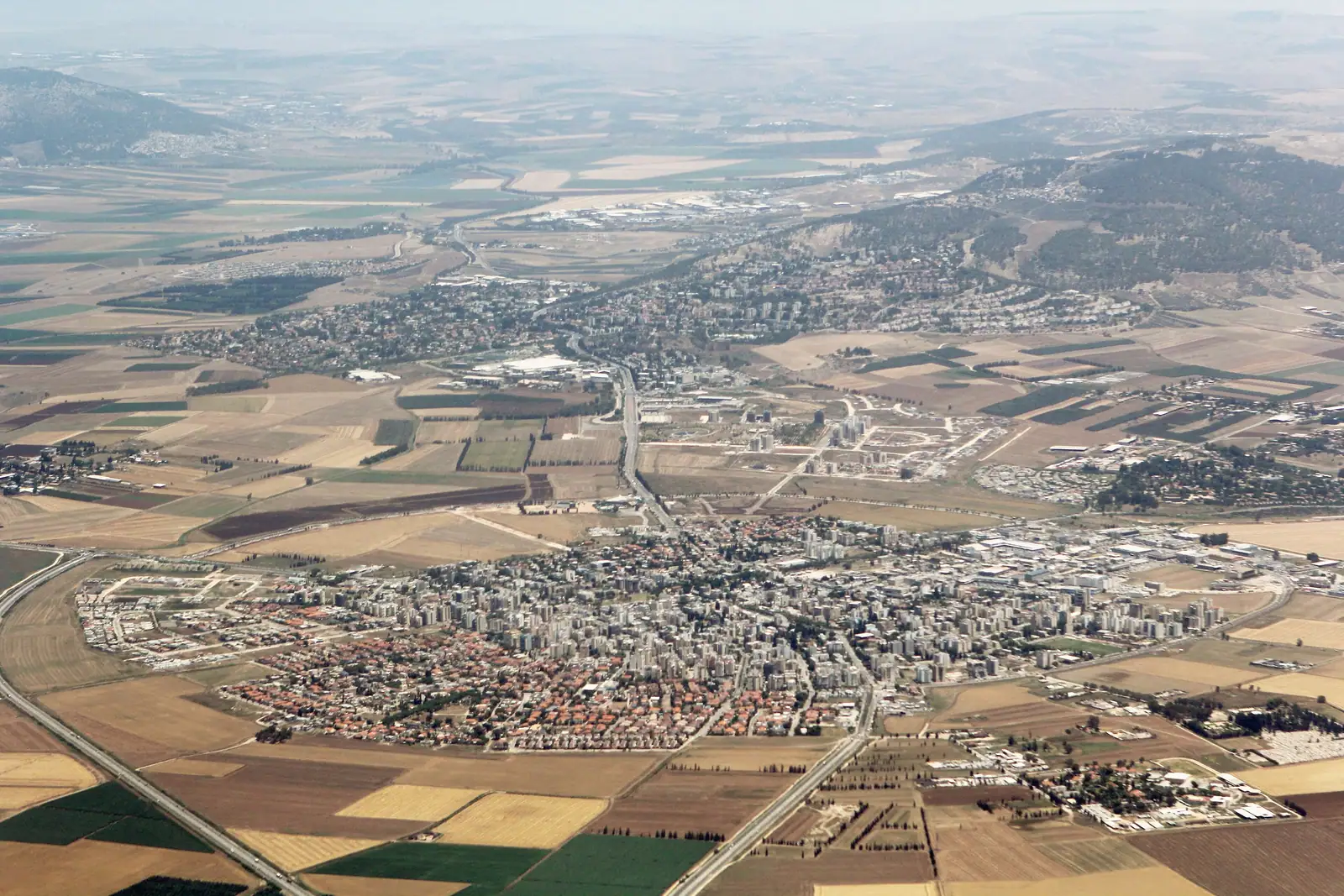
Afula is a city of 64,452 people (2024) in the Jezreel Valley, which Wikipedia calls the “Capital of the Valley”. The land was bought in 1925 by the American Zion Commonwealth, and Afula became a city in 1972.
HaEmek Medical Center, founded in 1930, serves an estimated 700,000 people, and the Alon Tavor industrial zone hosts Tadiran, Keter Plastic and StarPlast. Trains on the Jezreel Valley line, reopened in October 2016, connect the city with Haifa.
- 64,452 (2024)
- Population
- ₪1,420,000
- Average sale price
- Not on the 2026 list
- Tax credit (2026)
Average sale price, all property types. Source: Madlan, based on reported sales; figures read Oct 2026. A guide only: actual prices depend on the home.
Living in Afula
Quality of life
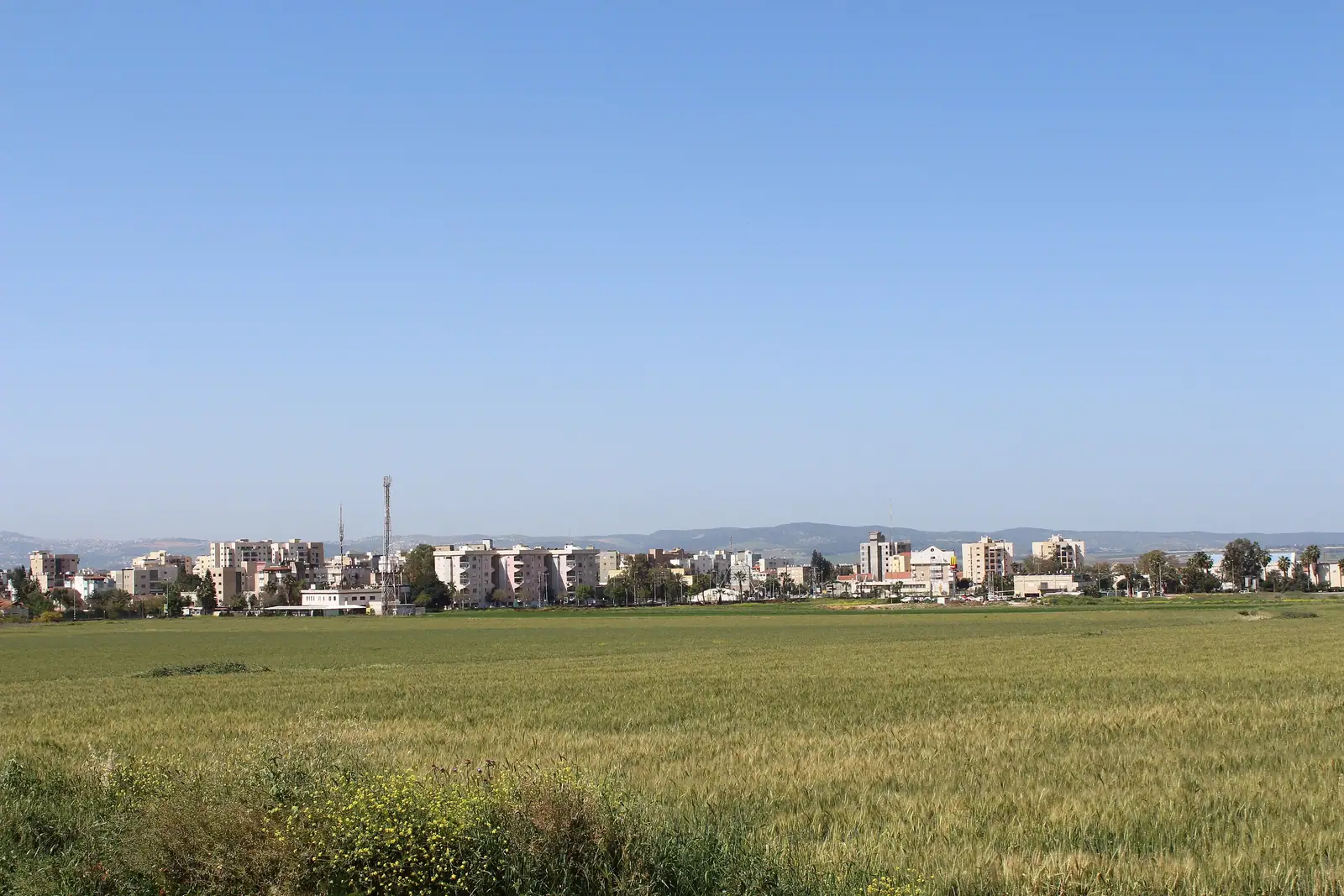
- A city in open farmland, with HaEmek Medical Center in town.
- A train to Haifa Center–HaShmona in about half an hour, 21 trains on a weekday (Ministry of Transport timetable).
- Tel Afula, a mound with a Crusader and Mamluk fortress, and a city auditorium and art gallery.
Community
- Nefesh B’Nefesh describes the full range of Israeli religious life, traditional to Haredi, with more than 1,400 religious families between Afula Illit and Givat HaMoreh.
- Afula Illit has a larger Anglo population, including many recent olim, and an English-speaking kollel.
Value for money
- Not on the 2026 list for the locality tax credit.
Good to know
- Afula is a large regional city, not a village: neighborhoods differ a lot. Givat HaMoreh and Afula Illit are the main religious neighborhoods.
- Nefesh B’Nefesh notes that some neighborhoods are expanding, with new apartments, duplexes and houses.
Community
Afula has 64,452 residents (2024), 89.5% of them Jewish (2022). The American Zion Commonwealth bought the land in 1925, after a small Arab village had been sold to the Sursock family in 1872, and Afula became a city in 1972.
Nefesh B’Nefesh describes the whole range of Israeli religious life, traditional to Haredi, with over 1,400 religious families between Afula Illit and Givat HaMoreh. Afula Illit has a larger Anglo population, including many recent olim, and an English-speaking kollel headed by Rabbi Shalom Storch. The guide lists volunteer contacts for newcomers.
The Alon Tavor industrial zone is home to Tadiran, Keter Plastic and StarPlast. HaEmek Medical Center, founded in 1930 and run by Clalit, serves an estimated 700,000 people and is within walking distance of Givat HaMoreh and Afula Illit. All four health funds have branches here.
Sources: Wikipedia, Afula · Nefesh B’Nefesh, Afula guide
Religious life
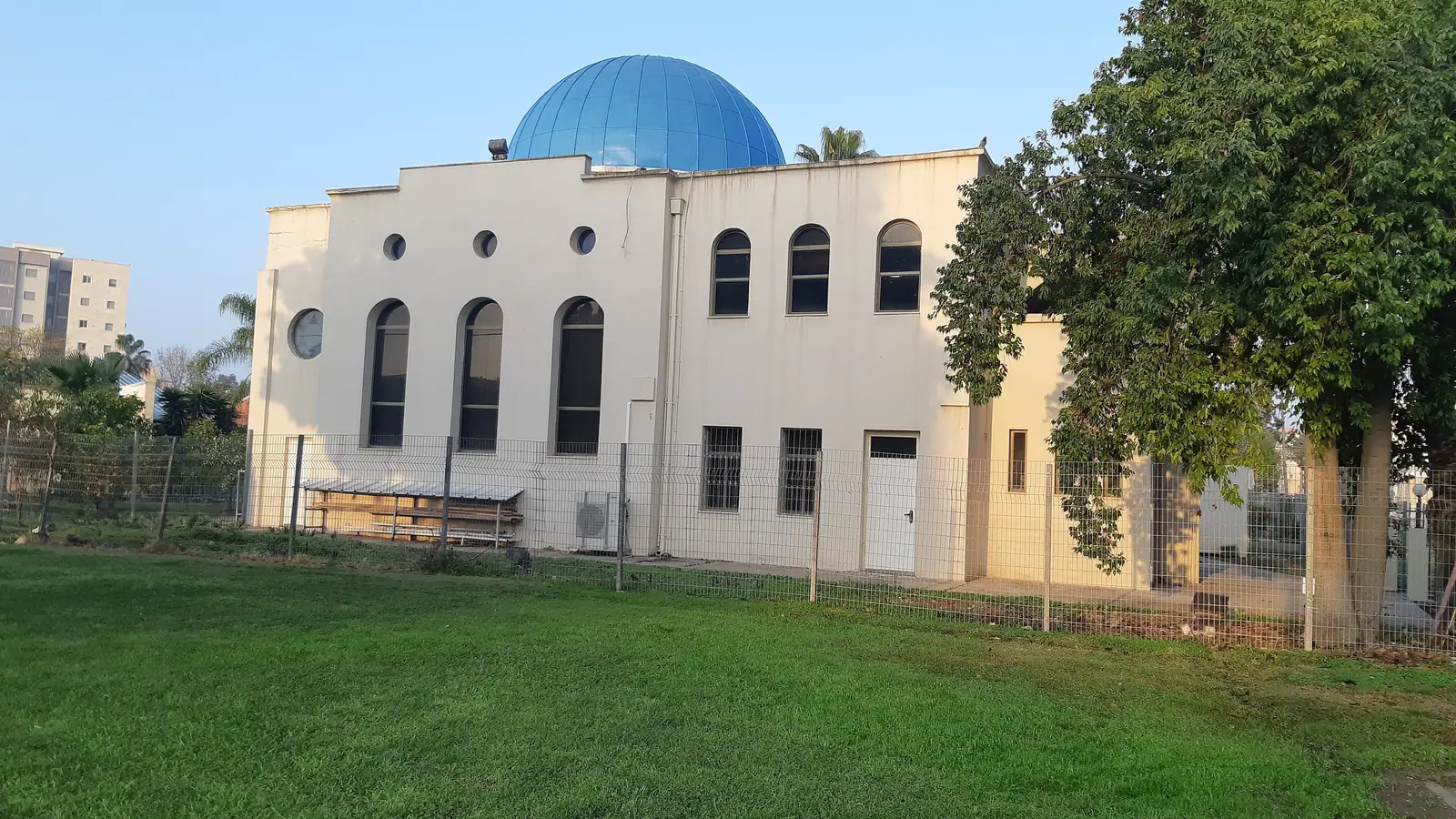
The main religious population is in Givat HaMoreh and Afula Illit, close together and joined by an eiruv. Bais Yaakov Afula serves Sephardi and Ashkenazi families; Bais Yaakov Zoharei Torah in Afula Illit focuses more on Sephardi families. The Great Synagogue was built in 1928–32 (its nusach is not given).
Hebrew Wikipedia says young Vizhnitz Hasidic couples began moving to Afula Illit in 2012, a Lithuanian community has grown since 2018 to about 300 families (2026), and about 2,000 homes for the Haredi public were under construction in 2026. It lists the Great Yeshiva (opened 2010) and a hesder yeshiva. We have not yet confirmed a mikveh count.
Sources: Nefesh B’Nefesh, Afula guide · Hebrew Wikipedia, Afula
Women’s mikveh (available in town)
Neighborhoods to know
- City center
- Afula Illit
- Givat HaMoreh
- Afula HaYeruka (“Green Afula”)
- Rova Yizrael
Schools
For religious families Nefesh B’Nefesh lists Derech Emes cheder in Givat HaMoreh (zichru or regular method), Mesilat Yesharim cheder (a Mamach program with secular studies), the two Bais Yaakov schools, three yeshivot ketanot, girls’ high schools including a Chadash branch offering the Chutzim exams, and schools in Kfar Gidon, about ten minutes by car, with smaller classes. Bais Yaakov Afula has experience with olim, and Kfar Gidon has extra resources for olim.
Hebrew Wikipedia counted 22 schools in 2015, 7 state-religious and 15 state, plus 76 kindergartens.
Sources: Nefesh B’Nefesh, Afula guide · Hebrew Wikipedia, Afula
Getting around
Afula has its own station, on the Jezreel Valley line. On a weekday 21 trains a day run from Afula to Haifa Center–HaShmona, usually in about 33 min. No train runs direct to Tel Aviv in the timetable; you change at Haifa.
About 62 bus lines stop in Afula on a weekday. Direct services from Afula include:
- Haifa: 79 direct trips on a weekday (lines 300, 301, 302), from about 38 min; Superbus.
- Tel Aviv: 64 direct trips on a weekday (lines 825, 833, 834, 840), from about 1 h 20 min; Egged and Nesiot VeTayarut.
- Jerusalem: 32 direct trips on a weekday (lines 859, 953, 955, 959, 982), from about 1 h 32 min; Egged, Nateev Express and Superbus.
- Nazareth: 131 direct trips on a weekday (lines 33, 352, 354, 356, 720…), from about 10 min; Egged, G.B. Tours, Nesiot VeTayarut and Superbus.
- Tiberias: 73 direct trips on a weekday (lines 30, 442, 541, 840, 859…), from about 28 min; Egged and Superbus.
- Bet She’an: 70 direct trips on a weekday (lines 151, 411, 412, 413), from about 23 min; Golan Regional Council and Superbus.
- Kiryat Tivon: 66 direct trips on a weekday (lines 301), from about 30 min; Superbus.
Times are from the first stop in town to the first stop in the destination city. Timetables change, so check the operator’s app before you plan a trip.
By road, Afula is about 40 min (44 km) from Haifa, 1 h 13 min (92 km) from Tel Aviv, 1 h 42 min (132 km) from Jerusalem and 1 h 15 min (93 km) from Ben Gurion Airport, the nearest international airport. These are free-road estimates with no traffic, so allow more at rush hour.
Sources: Ministry of Transport timetable · OpenStreetMap routing · Wikipedia, Israel Railways
Afula is part of Jezreel Valley & Tivon, with Migdal HaEmek, Yokneam Illit and Kiryat Tivon close by.
Nature & attractions
Tel Afula is a mound with a Crusader and Mamluk-era fortress, and the city has an auditorium and art gallery. Hapoel Afula plays in the national basketball and football leagues.
Sources: Wikipedia, Afula
In half an hour or less you can be at Harod Spring (Ma’ayan Harod) National Park (12 min), Tel Megiddo National Park (13 min), Bet She’an National Park (26 min) and Bet She’arim National Park (28 min). Up to 45 minutes takes you to Zippori National Park (37 min), Hamat Tiberias National Park (41 min), Amud Stream Nature Reserve (43 min) and Arbel National Park and Nature Reserve (44 min). For a longer day out, Caesarea National Park (46 min), Ramat HaNadiv (48 min), Belvoir (Kokhav HaYarden) National Park (51 min) and Korazim National Park (53 min) are within the hour.
All 13 parks and reserves within an hour, with drive times
- Harod Spring (Ma’ayan Harod) National Park · about 12 min by roadA spring from a cave on the slope of Mount Gilboa, a clear brook and a paddling pool, and the Hankin House museum. INPA, Harod Spring
- Tel Megiddo National Park · about 13 min by roadThe palaces, temples, gates and water system of a major Canaanite city, part of the UNESCO World Heritage biblical tells. INPA, Tel Megiddo
- Bet She’an National Park · about 26 min by roadThe Roman and Byzantine city, with its theater, bathhouse and streets, below the mound of the biblical city. INPA, Bet She’an
- Bet She’arim National Park · about 28 min by roadA burial ground where Rabbi Yehuda HaNasi is buried, with the decorated Menorah Caves. INPA, Bet She’arim
- Zippori National Park · about 37 min by roadA former capital of the Galilee and seat of the Sanhedrin, with Roman and Byzantine mosaics. INPA, Zippori
- Hamat Tiberias National Park · about 41 min by roadAn ancient synagogue with a mosaic floor, an 18th-century Turkish bathhouse and 17 hot springs by the Kinneret. INPA, Hamat Tiberias
- Amud Stream Nature Reserve · about 43 min by roadA stream that runs all year, with rock pools, old flour mills and prehistoric caves. The upper section, reached from Road 866, is open to visitors. INPA, Amud Stream
- Arbel National Park and Nature Reserve · about 44 min by roadA cliff-top park over the Kinneret, with Arbel Fortress, a cave village and the ruins of a Galilean synagogue. INPA, Arbel
- Caesarea National Park · about 46 min by roadThe Roman port city Herod the Great built from about 22 BCE, with a theatre that still hosts concerts, a hippodrome, Crusader walls and aqueducts on the beach.
- Ramat HaNadiv · about 48 min by roadA nature park and garden at the southern end of the Carmel, with pine and cypress groves around the tomb of Baron Edmond de Rothschild and his wife.
- Belvoir (Kokhav HaYarden) National Park · about 51 min by roadAn almost complete Crusader fortress above the Jordan Valley, a path to the En HaYadid spring and a sculpture garden. INPA, Belvoir
- Korazim National Park · about 53 min by roadA Jewish village from the time of the Mishnah and Talmud, with a synagogue and a ritual bath. INPA, Korazim
- Nahal Me’arot Nature Reserve · about 54 min by roadFour prehistoric caves (Tabun, Jamal, El-Wad and Skhul) with remains of about 500,000 years of human life, a UNESCO World Heritage Site since 2012. INPA, Nahal Me’arot
Drive times are free-road estimates from the center of Afula (OpenStreetMap routing). Hours, fees and booking rules change; check the Israel Nature and Parks Authority before you go.
Homes in Afula
Tell us what you’re after and we’ll look in Afula for you. Many homes never reach the big listing sites.
Gallery
Sources
The community, schools, getting-around and nature sections were checked on 27 Oct 2026 (towns added on 2 Nov 2026 that day) (train and bus counts are for a typical weekday, Sunday 8 Nov 2026, in the timetable valid 2 Nov to 2 Dec).
- Wikipedia, Afula
- Nefesh B’Nefesh community guide, Afula (updated 29 Jan 2024)
- Wikipedia, Jezreel Valley railway
- Locality income-tax credits: third-party compilation (relotax, GitHub, updated 2 Aug 2026) of the Israel Tax Authority 2026 deductions booklet
- Hebrew Wikipedia, עפולה
- Ministry of Transport, open public-transport timetable (GTFS), feed valid 28 Oct to 26 Nov 2026; weekday counts are for a typical Sunday in that feed (1 Nov 2026), worked out by DreamNorth
- OpenStreetMap routing (OSRM public server, car, no live traffic), drive times and distances worked out by DreamNorth
- Wikipedia, Israel Railways (lines and stations)
- Israel Nature and Parks Authority, Harod Spring National Park
- Israel Nature and Parks Authority, Tel Megiddo National Park
- Israel Nature and Parks Authority, Bet She’an National Park
- Israel Nature and Parks Authority, Bet She’arim National Park
- Israel Nature and Parks Authority, Zippori National Park
- Israel Nature and Parks Authority, Hamat Tiberias National Park
- Madlan, Afula sale prices
- Israel Tax Authority, nadlan.gov.il: reported real-estate transactions